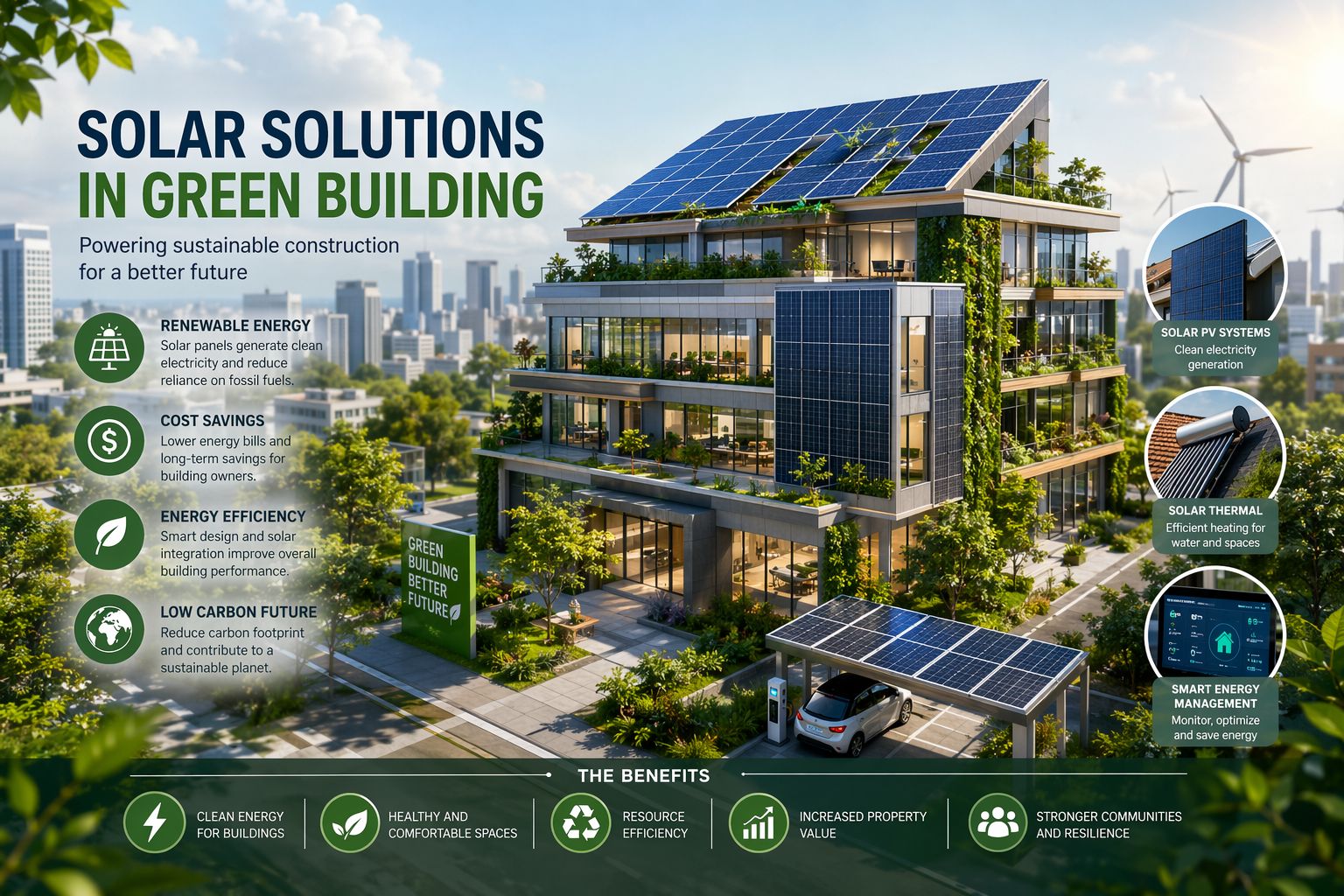
Sources: The Sustainable Times
The construction sector is at the heart of the global sustainability challenge. Buildings account for a significant share of energy consumption, resource use, and greenhouse gas emissions. According to the Solar Impulse Foundation, the future of construction lies in adopting clean, efficient, and profitable solutions that reduce environmental impact while maintaining economic viability.
In line with this transformation, Kotook aims to ensure that all essential green building services—especially solar solutions—are seamlessly integrated within a unified Green Ecosystem. CEO of KOTOOK Tech Ltd. in advocacy towards Green Ecosystem – Javad Mahmoodi explained, “Sustainable construction begins with solar innovation, empowering communities, reducing emissions, and creating resilient, energy-efficient buildings for future generations.”
Among these solutions, solar technologies stand out as a cornerstone of green building—offering renewable energy, cost savings, and long-term resilience.
Principles of Green Building
Green building is guided by a set of sustainability principles aimed at minimizing environmental harm while improving human well-being. These include:
west reduction and recycling
Healthy indoor environments
Lifecycle performance optimization
Use of renewable resources
Solar solutions directly support these goals by transforming buildings from energy consumers into energy producers.
The Role of Solar Energy in Green Buildings
Renewable Energy Generation
Solar panels (photovoltaic systems) convert sunlight into electricity, reducing dependence on fossil fuels. In green buildings, solar systems can be integrated into rooftops, façades, or even windows through Building-Integrated Photovoltaics (BIPV).
This aligns with the Solar Impulse vision of reducing emissions while maintaining economic performance, proving that sustainability can be profitable. 
Energy Efficiency and Cost Savings
Solar solutions lower operational costs by:
Reducing electricity bills
Providing energy independence
Stabilizing long-term energy expenses
The Solar Impulse Foundation emphasizes that many clean technologies are not only ecological but also financially viable and job-creating, making them attractive for large-scale adoption. 
Solar Thermal Systems
Beyond electricity, solar energy is widely used for heating applications, including:
Solar water heaters
Space heating systems
Passive solar design (natural heating through building orientation)
These systems reduce energy demand and complement photovoltaic technologies.
Smart Integration with Building Design
Solar solutions are most effective when integrated early in the design phase. Green buildings use:
Orientation optimization (maximizing sunlight exposure)
Passive solar design (natural lighting and heating)
Energy storage systems (batteries for solar energy)
Such strategies reflect the broader green building approach of controlling energy consumption through design and technology integration. 
Contribution to Circular and Low-Carbon Economy
Solar technologies contribute to a circular economy by:
Reducing reliance on finite resources
Lowering carbon emissions
Supporting decentralized energy systems
The Solar Impulse Foundation highlights that clean technologies, including solar, are essential for building a system that is both environmentally sustainable and economically scalable. 
Innovations and Future Trends
Smart Solar Buildings
Future buildings will integrate:
AI-driven energy management systems
Smart grids and energy sharing
Net-zero or energy-positive designs
These innovations transform buildings into active participants in energy ecosystems.
Scalable Clean Solutions
The Solar Impulse Foundation has identified over 1,000 clean and profitable solutions, many applicable to construction and energy systems. 
This demonstrates that the technologies needed for sustainable construction already exist—the challenge lies in adoption and implementation at scale.
Challenges to Adoption
Despite their benefits, solar solutions face several barriers:
Hi initial investment costs
Regulatory and policy limitations
Lack of awareness or technical expertise
Integration challenge in existing buildings
However, the Foundation stresses that the issue is not technology availability but the need for supportive policies and market conditions. 
Conclusion
Solar solutions are central to the transformation of the construction industry. By enabling renewable energy generation, improving efficiency, and supporting sustainable design, they embody the principles of green building.
As highlighted by the Solar Impulse Foundation, the future of construction depends on embracing solutions that are both environmentally beneficial and economically viable.
The path forward is clear: integrating solar technologies into buildings is not just an environmental necessity—it is a strategic investment in a cleaner, more resilient, and profitable future.

 English